



- The identity crisis in Sri Lankan rugby
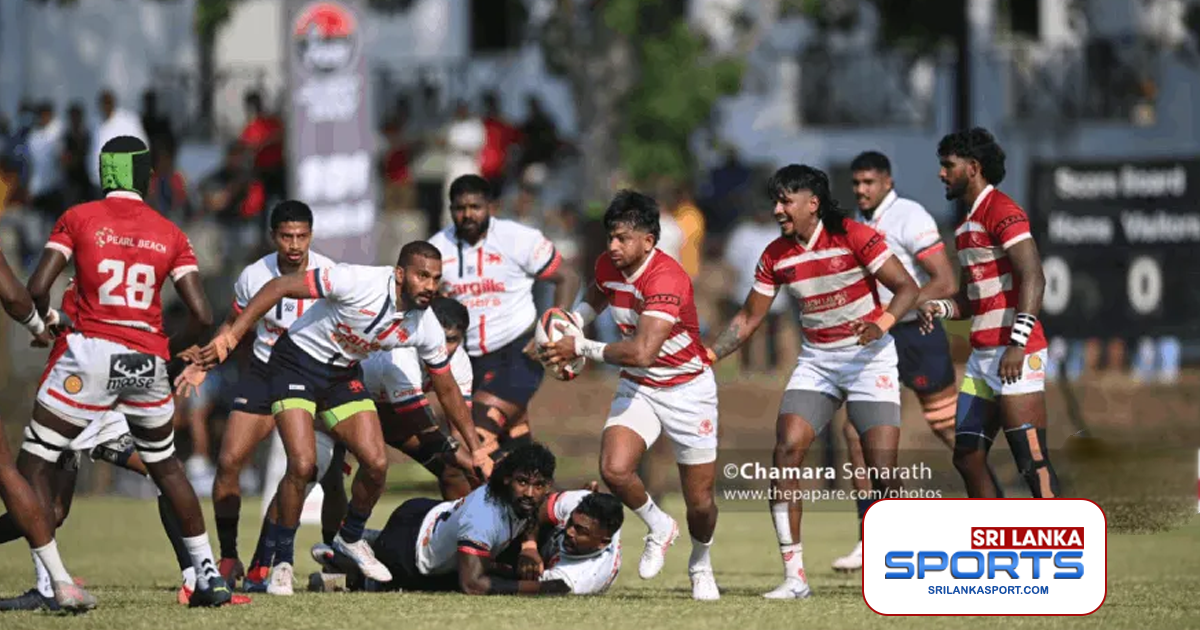
The current club rugby season has delivered a rare gift: a genuine four-horse race.
For years, the Inter-Club Rugby League was a predictable one-horse sprint, but today the turf is a high-stakes battleground.
Yet, as the quality of play reaches a fever pitch, the spotlight has drifted from the spectacular tries to the men in the middle – and a darker, more systemic rot.
Amidst the whistle-blowing, a serious allegation of harassment, levelled by a female team manager against an individual with a ‘history of deviant behaviour,’ looms large.
The episode isn’t a team issue; it is a culture issue. If Sri Lankan rugby is to move forward, it must show the foresight to take the bull by the horns – not just to punish, but to protect the integrity of the sport.
Breaking the old guard
For over a decade, the referees’ society has been synonymous with the ‘Jinkas’ – a hybrid of Jamal, Jayasinghe, and Dinka.
To many fans, they are a literal jinx on the game. While school-tie allegiances and shadowy funding often fuel perception, the mystery remains: why was the committee so keen on recycling the same leadership?
Sri Lanka Rugby (SLR), the governing body, has finally stepped in, invoking Sports Regulation 7.16 to form an oversight committee.
Despite ‘indirect’ warnings from the old guard for referees to stay away, many have jumped ship to SLR’s new elite panel.
The ‘foreign referee’ fallacy
Social media is a fickle master. For weeks, the ‘keyboard warriors’ demanded that foreign officials save us from local incompetence. Then came Aymen Jrill, the Asia Rugby official based in Saudi Arabia.
Saturday (7): Jrill was the darling of the fans after a stellar Havelocks vs. CR & FC clash.
Sunday (8): following the CH & FC vs. Kandy match, he was the villain.
The lesson? The grass isn’t always greener; sometimes it’s just as hard to mow.
Whether it was the man from Saudi Arabia or the official from Japan, the games exposed a harsh truth: our players and coaches have grown accustomed to ‘permissible infractions’ that don’t fly on the international stage.
The ‘wrong number’ debacle: the most baffling moment occurred when a yellow card was issued to Kandy SC’s Charles Praveen.
Due to jersey number confusion, a mandatory red card (for No. 11) was avoided.
Add to that technical glitches regarding the 50:22 rule and awarding a scrum for a free kick, and it’s clear that ‘foreign’ doesn’t always mean ‘flawless.’
Imports: Catalysts or crutches?
This season, each club is permitted one foreign player. While the impact has been tangible, it hasn’t been the ‘silver bullet’ many expected.
The danger lies in building systems around imports rather than using them to elevate home-grown talent.
Club – impact level – primary contribution
- Kandy SC: strong attacking flair and tactical depth
- Police SC: positive leadership and game management – a stabilising force
- Havelock SC: positive – enhances pace and creativity for local talent
- CR & FC: moderate stability in the backline and mentorship
- Navy SC: positive defensive strength and consistency
- CH & FC: mixed physicality that occasionally overshadows local forwards
- Army/Air Force: developing discipline and athleticism – still adjusting to domestic style
The better impact of a quality foreign player lies with the recruits, as shown by those hired by Air Force and Police.
The verdict: the best balance is found at clubs like Police and Air Force, where foreigners act as mentors rather than replacements.
A call for competence
To cap off the chaos, even the commentators – some of whom allegedly sit on the new oversight committee – have displayed a worrying ignorance of the law book, misinterpreting basic ‘marks’ and scrum options.
When the guardians of the game are as confused as the fans, the ‘merry men of Jinkaland’ gain ammunition to claim the new system is just as outdated as the old one.
If Sri Lankan club rugby wants to keep its renewed popularity, the focus must return to the pitch. But that requires everyone – officials, coaches, and commentators – to know the rules as well as for the players to know the dirt.